
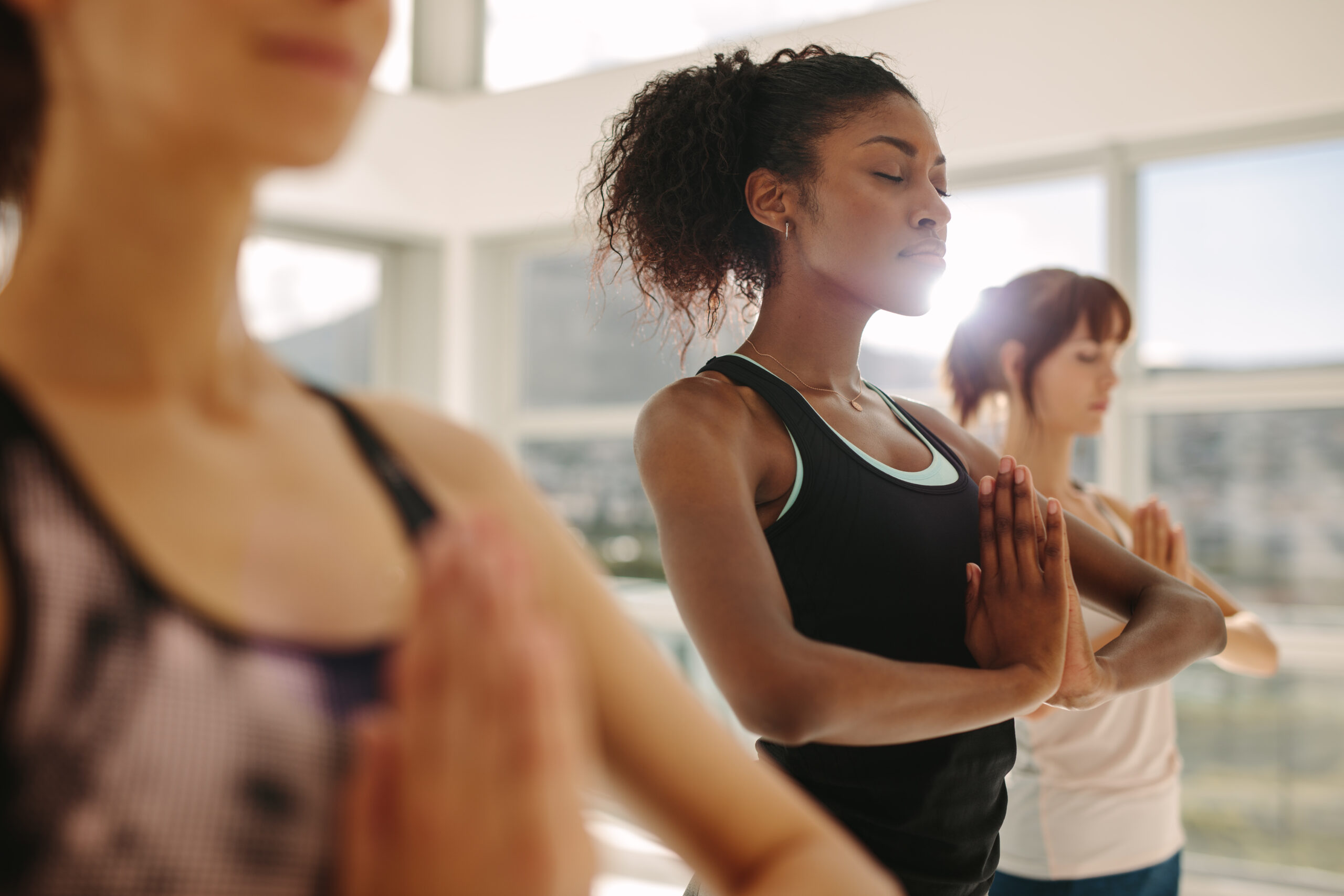
Yoga has a reputation for being all about flexibility, but that’s only part of the story. It combines movement, breathing and focused attention, and research suggests the payoff reaches well beyond touching your toes.
What the Research Says
Stress relief is one of the best-supported benefits. A 2020 review of 12 studies of healthy adults found that yoga lowered perceived stress in every one of them. Mayo Clinic points to hatha yoga as a particularly good choice for easing stress. Hatha is one of the most common styles of yoga. It pairs basic poses with steady breathing, and its slower pace and simpler movements make it easy to relax into. Part of the reason yoga calms you down is your breath. The slow, mindful breathing used in yoga boosts activity in the parasympathetic nervous system, which can lower your heart rate and improve sleep and digestion.
The physical benefits add up, too. Research suggests yoga may improve sleep, balance and mental and emotional health, and it may also ease neck pain and tension-type headaches. For low-back pain, a 2020 federal report found that yoga improved both pain and function over the short and intermediate term, with results similar to exercise and massage.
Two Poses to Start With
You don’t need a studio or special equipment for these. A mat, rug or carpeted floor works fine.
Cat-Cow
Start on your hands and knees with your hands under your shoulders and your knees under your hips. As you breathe in, let your belly drop toward the floor and lift your chest and gaze. This is Cow. As you breathe out, round your back toward the ceiling and tuck your chin. This is Cat. Move slowly between the two for five to ten breaths. This simple flow can loosen up your back, engage your core and help you get used to moving with your breath.
Child’s Pose
Kneel with your big toes touching and your knees about hip-width apart, or wider if that feels better. Sit your hips back toward your heels, then fold forward as you exhale and lower your forehead toward the floor. Rest your arms alongside your legs with your palms facing up, and take at least eight slow, deep breaths. This pose stretches your lower back, hips, thighs and shoulders, and it’s a good place to return anytime you need a break.
Start Small
Five minutes a day is a real start. Move only as far as feels comfortable, and never push into pain. If you have a knee or hip injury, a spine condition, severe high blood pressure, balance problems or glaucoma, some poses may need to be modified or skipped, so talk with your healthcare provider before you begin.
Sources:
“Cat-Cow Stretch: How To Do It and Benefits,” Cleveland Clinic, health.clevelandclinic.org, Accessed Oct. 13, 2026.
“Child’s Pose,” Mayo Clinic, mayoclinic.org, Accessed Oct. 13, 2026.
“Child’s Pose: How To Do It To Achieve the Benefits,” Cleveland Clinic, health.clevelandclinic.org, Accessed Oct. 13, 2026.
“Mayo Clinic Q and A: What’s the Benefit of Yoga?,” Mayo Clinic News Network, newsnetwork.mayoclinic.org, Accessed Oct. 13, 2026.
“Stress Relievers: Tips to Tame Stress,” Mayo Clinic Staff, Mayo Clinic, mayoclinic.org, Accessed Oct. 13, 2026.
“Yoga: Effectiveness and Safety,” National Center for Complementary and Integrative Health, nccih.nih.gov, Accessed Oct. 13, 2026.